

What Makes a Sweatshirt Expensive? 5 Details That Separate Luxury Sweatshirts From the Cheap Ones
Oct 30th 2026

Why does one sweatshirt cost $30 while another is closer to $100? The honest answer: price can reflect more fabric, better material, careful construction, and the work involved in getting the fit and finish right. But a high price tag by itself doesn't prove quality.
To judge a sweatshirt in a store or on a product page, check these five details, in order: fabric and weight, ribbing, stitching, fit and pattern, then where and how it's made. You can put that checklist to work with our classic crewneck sweatshirts, full zip hoodies, or Privé luxury sweatshirts.
1. Fabric weight and fibre: start with what touches your skin
GSM means grams per square metre. It tells you how much a square metre of fabric weighs, so it's a useful way to compare fabric weight, but not a complete quality score. A heavyweight sweatshirt uses more material, which can add to its cost. Still, a heavier garment isn't automatically better: fibre, fabric feel, and construction matter too.
Check the fibre content as well as the number. A premium cotton sweatshirt made with 100% natural cotton has a familiar, soft feel and a breathable character. Other sweatshirts use synthetic blends; those can feel different against the skin, so the right choice depends on what you prefer.
For reference, our Classic styles use 420 GSM heavyweight cotton. The 450 Reserve hoodie uses 450 GSM organic cotton, while the Ladies UltraSoft collection uses 350 GSM French Terry for a mid-weight feel. The numbers describe different weights, not a simple ranking from "bad" to "good."
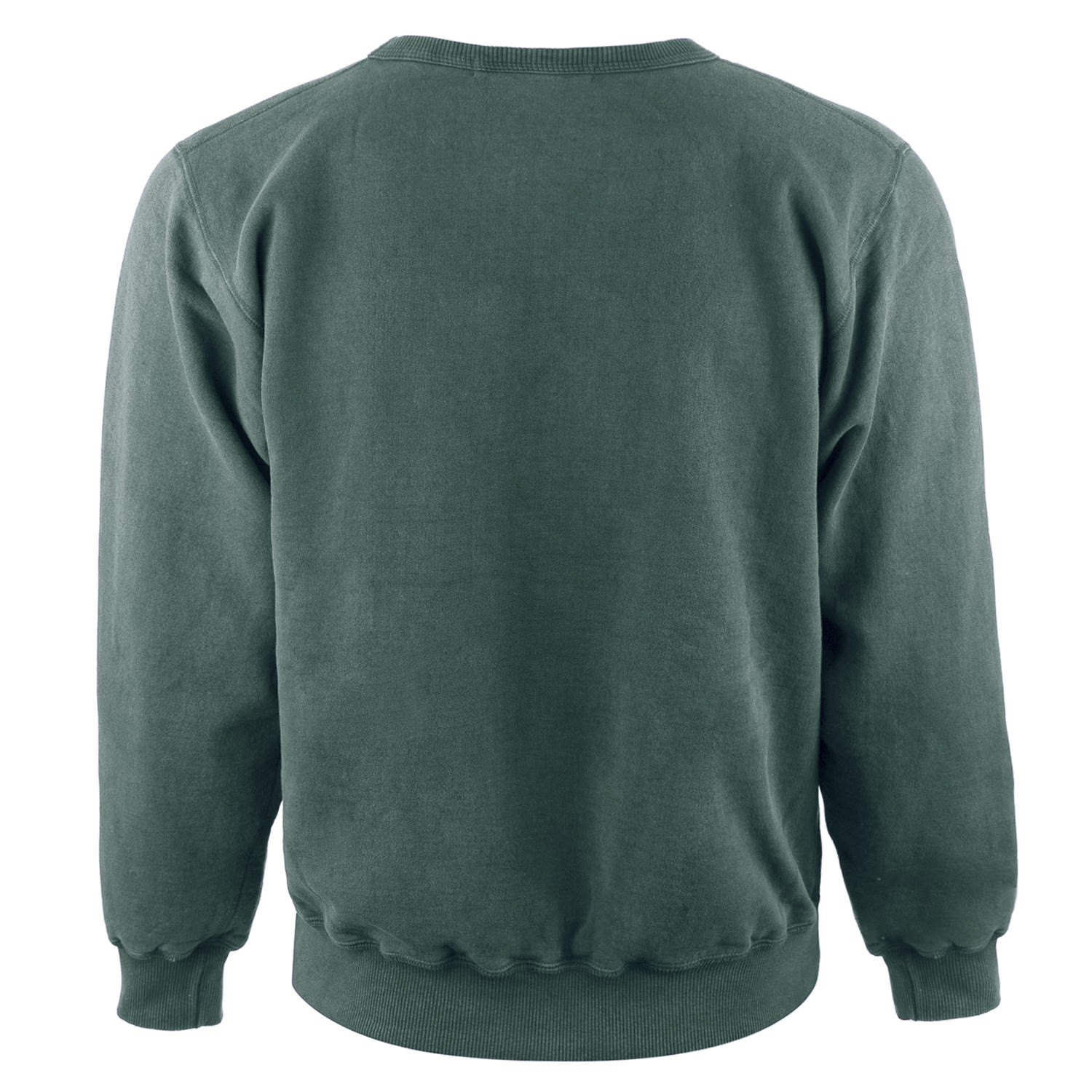
If a product page only says "premium" without naming the fibre or giving useful fabric details, you have less information to judge. For a real-world reference, take a look at the construction of this 420 GSM heavyweight hooded pullover.
2. Collar and cuffs: look for ribbing that holds its shape
The collar, cuffs, and waistband get tugged, stretched, and pushed around all day. They're often the first places where a sweatshirt starts looking tired.
Look for ribbed knit that feels substantial and sits flat against the body. In a store, gently stretch a cuff and release it. Does it move back into shape, or stay loose and wavy? On a product page, close-up images can help you check whether the ribbing looks even and firmly attached.
Good ribbing should feel comfortable, not tight or stiff, and give the sweatshirt a tidy finish. A soft fabric can feel nice in your hand, but if the collar is already rippled or the cuff looks limp, that softness may not tell the whole story.
3. Stitching and seams: inspect the quiet details
Seams do a lot of work without asking for attention. Check that the stitching looks even, the seam lines sit straight, and there are no obvious loose threads or puckered areas. Pay special attention where sleeves join the body and where pockets meet the sweatshirt. These spots take more strain.
Side seams can also offer clues about how a garment is assembled. Don't treat one construction method as automatically superior; instead, look for clean finishing and a shape that hangs evenly. For example, our Privé crewneck with side rib pairs ribbed side panels with a cross-grain cut.
A maker's No-Pilling Guarantee is another useful detail. It isn't something you can verify by touch in a store, but it tells you the maker is willing to stand behind the garment's performance. Consider it alongside the fabric and stitching, not instead of them.

4. Fit and pattern: pay attention to shape, not just the label
A high quality hoodie or sweatshirt should feel considered in its proportions: the shoulder, sleeve, body, and hem work together, and seams lie smoothly rather than twisting or pulling. If you're shopping online, look for garment measurements and compare them with a sweatshirt you already like.
Also check whether the garment is pre-shrunk. That helps make the fit more consistent, but it doesn't mean cotton can't shrink at all. Plan for 2-3% shrinkage and care for the garment gently: machine wash in cold water, maximum 40°C / 105°F, with like colors; use no bleach; tumble dry on low or air-dry. Wash sand-colored garments separately, especially for the first wash, to help prevent dye transfer.
Pattern construction matters, too. Some sweatshirts have side seams; others use a tube-style body without them. Neither approach is automatically a quality problem. What matters is whether the pattern gives you a comfortable fit and whether the finished garment stays balanced and lies cleanly.
5. Where and how it's made: understand what the price pays for
A sweatshirt's price may reflect more than the fabric. Pattern development, cutting, sewing, finishing, and checking the garment all take time. Heavier material can also be more demanding to handle during construction.
Look for clear product information about origin and construction rather than assuming a higher price means more care. Our garments are North American Made, crafted in Canada. For us, hand-crafted quality and durable construction are part of the point: an everyday sweatshirt should be made to earn repeat wear, not just look convincing in a photo.
Of course, brand positioning and retail costs can also affect the price. That's why it helps to judge the garment itself, rather than assuming the most expensive option is always the best one.
How to tell quality in 60 seconds
Use this quick checklist in a store or while scanning a product page:
- Fabric: Is the fibre content clearly listed? Is GSM provided for a useful weight comparison?
- Ribbing: Does the collar, cuff, or waistband look even and substantial?
- Stitching: Do seams appear straight, tidy, and securely finished?
- Fit: Are garment measurements available? Does the silhouette look balanced?
- Care and claims: Is the garment described as pre-shrunk? Are shrinkage expectations and guarantees explained?
- Value: Can you see what the price reflects beyond a vague "premium" label?
You don't need a textile degree. A little attention to those details can tell you more than a brand name or a dramatic product description.
Ready to compare a classic crewneck or hoodie?
If you want to feel the difference for yourself, start with a classic crewneck sweatshirt or compare the construction and details in our full zip hoodies. For a more tailored option, explore the Privé collection. You can also browse our premium cotton sweatpants.
Check the size chart on the product page, or use the Find My Size widget to help choose a fit. The best sweatshirt isn't simply the one with the biggest number on the price tag. It's the one whose fabric, construction, and everyday comfort make sense to you.
Frequently asked questions
Why is a cotton sweatshirt expensive?
A higher price may reflect more fabric, the cotton fibre and fabric quality, ribbing, careful stitching, pattern work, finishing, and quality checks. Price alone does not prove quality, so compare those details.
What GSM is considered heavyweight for a sweatshirt?
GSM measures fabric weight, not quality by itself. Our Classic styles use 420 GSM heavyweight cotton; the 450 Reserve hoodie uses 450 GSM organic cotton; and Ladies UltraSoft uses 350 GSM French Terry for a mid-weight feel.
Do expensive sweatshirts last longer?
Not necessarily. A well-made sweatshirt can offer better fabric, seams, ribbing, and fit, but a higher price is not a guarantee. Check the construction, care guidance, and any maker's guarantee.
Does 100% cotton pill?
Cotton can pill when fibres rub against each other or other surfaces. Fabric, finishing, and care all matter. A No-Pilling Guarantee is a useful maker commitment, and washing gently can help reduce surface friction.
Is a heavyweight hoodie too warm to wear indoors?
That depends on your space and how warm you tend to feel. Heavyweight fabric feels more substantial and can hold more warmth, while a mid-weight French Terry option may feel more comfortable indoors.