

What Makes the Sweatshirt Feel Expensive?
Dec 26th 2025
Walk into any modern office, airport lounge, or dinner spot, and you will see it, “the sweatshirt”.
Sweatshirts are no longer reserved for couch days or gym bags. They are now attire for spaces that once demanded button-downs and blazers. Yet, some sweatshirts look intentional while others look like “zero-effort”.
Now, the problem is not whether a sweatshirt belongs in certain settings or not; the problem is whether “your” sweatshirt does.
Contrary to popular belief, it’s not the price or logos alone that decides that difference. It’s the first impression and experience that your sweatshirt provides.
Expensive Is Not Loud Anymore
Yes, there has been a time when looking expensive meant looking branded. Big logos, obvious names, visual shouting. But that era is fading fast.
Today, expensive looks are rather quiet. It looks considered, like someone chose the piece because of how it feels and falls, not because of what is printed across the chest or at the back of the neck.
Many high-priced heavyweight cotton sweatshirts fail this test. They cost more but deliver the same thin fleece, the same stretched seams, and the same tired silhouette as cheap ones. Basically, you are paying for recognition, not refinement.
But a truly expensive-looking sweatshirt does not need to announce itself.
The First Signal Is Weight, Not Softness
People often mistake softness for quality. The truth is that soft can be manufactured, but weight cannot be faked as easily.
Pick up a sweatshirt that looks expensive, and you will notice it immediately. It has presence; the fabric does not collapse in your hands. Most importantly, it feels dense but not stiff.
Thicker, heavyweight cotton (10-16oz), especially when woven tightly or finished as loopback on the inside, gives structure. That structure is what allows a sweatshirt to hold its shape through the day. It does not cling, sag, or lose authority fast.
Thin sweatshirts may feel pleasant at first touch, but they telegraph casual the moment you wear them outside relaxed settings. However, that doesn’t mean you can pick either softness or structure. A heavyweight sweatshirt made from ringspun cotton feels super soft yet polished due to its structure.
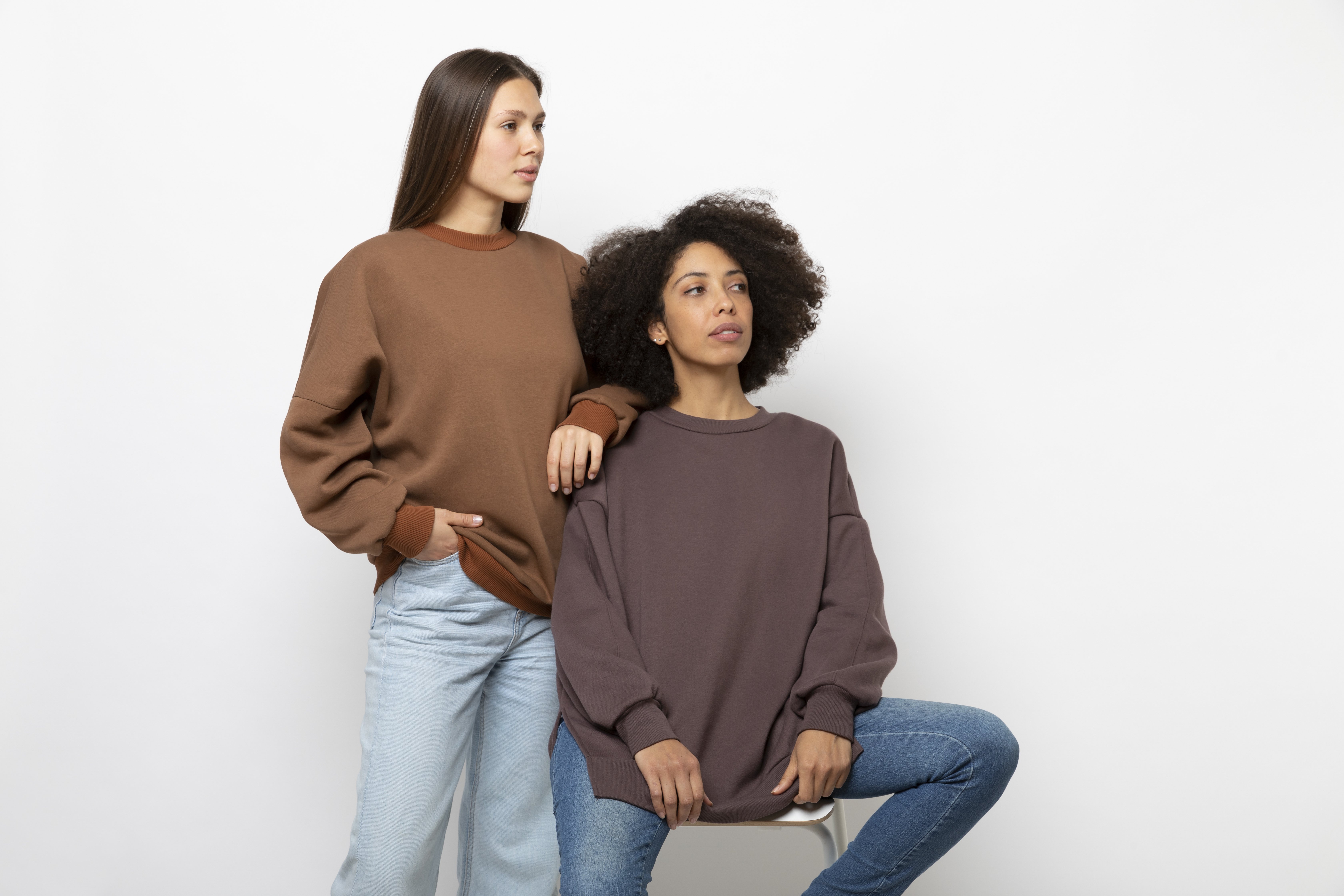
Shape Tells The Truth Before Logos Does
Fit matters more than price. It always has.
For instance, an expensive-looking cotton hooded sweatshirt sits cleanly on the shoulders. The hood sits properly at the back, the neckline lies flat, the hem does not flare or twist, and the sleeves fall straight without clinging to the arms or ballooning at the cuffs.
Cheap hoodies and sweatshirts often fail here. After a few wears, the collar stretches, the body loses balance, and it starts to look sloppy even when it is clean.
You can spot this at a glance. If the sweatshirt looks tired on the hanger, it will look worse on a person.
Seams Are Where Quality Shows Up Over Time
Most people never look at seams; that is why bad ones get away with it.
High-quality 100% cotton sweatshirt uses clean, consistent stitching that stays flat. In better constructed pieces, you will often find flatlock stitching in key areas. It keeps seams smooth, improves durability, and prevents that rippled look that develops after washing.
Cheap sweatshirts stretch at the seams quickly. You will see puckering, uneven lines, and fabric pulling away from the stitch. Once that happens, the sweatshirt starts looking cheap, no matter what it costs.
If you are wearing a sweatshirt to work or social settings, this detail matters more than you think.
Color Restraint Signals Confidence
Expensive sweatshirts rarely rely on trendy colors or loud graphics. They lean into neutrals, deep tones, and muted shades as they age better and pair easily with tailored trousers, coats, and leather shoes.
And who honestly would want to spend a hefty amount on a sweatshirt that looks seasonal?
Fading also separates quality from costume. Better sweatshirts fade evenly and slowly. Cheap ones lose depth fast, especially around seams and high-friction areas. If the color looks washed out after a handful of wears, the illusion of quality disappears with it.
Material Choice Change The Room You Can Wear It In
Not all sweatshirts are meant for the same spaces.
A thick cotton sweatshirt with good structure can replace a sweater in many office environments. Paired with clean trousers and proper footwear, it looks modern and composed.
A lightweight fleece sweatshirt belongs elsewhere. It is fine for casual days, but it does not carry authority.
The difference is not subtle in person. One looks intentional, and the other looks like loungewear that wandered into the wrong room.
Labels Do Not Equal Longevity
Yes, more expensive clothing can be better made and last longer. But this is not guaranteed, especially with large fashion brands.
If a sweatshirt is covered in logos and branding, it often sacrifices fabric and construction to fund the name. The result is disappointment disguised as luxury. True quality invests in materials, pattern making, and finishing. Those things are felt, not advertised.
Sweatshirts are indeed comfortable clothing pieces, but comfort does not have to mean careless. The best sweatshirts manage both. They feel easy to wear and look appropriate in more places than expected.
That is what makes them look expensive. Not the price tag. Not the label. The way they hold themselves is just like the person wearing them.